NoweCraftRank SitesDarmowa strona i sklepZrób swoją ›
AshlarDarmowe oprogramowanie serwera oparte na Paper, z ochroną przed DDoS i backdoorami Zobacz Ashlar ›SpołecznośćZadawaj pytania, dziel się budowlami i znajdź ludzi do gry Dołącz do forum ›
Zasoby / Shadery / AuraLite Shaders

AuraLite Shaders

Lightweight OpenGL 4.6 shaders for Minecraft 1.16–26.3 with volumetric godrays, HDR rendering, 3D clouds, and LabPBR support.

ShaderyZa darmo1.16 – 26.x
autor: AlexanderNyr · pobrane z Modrinth
Pobierz ›

Bezpośrednie pobieranie z Modrinth · 15,839 pobrań

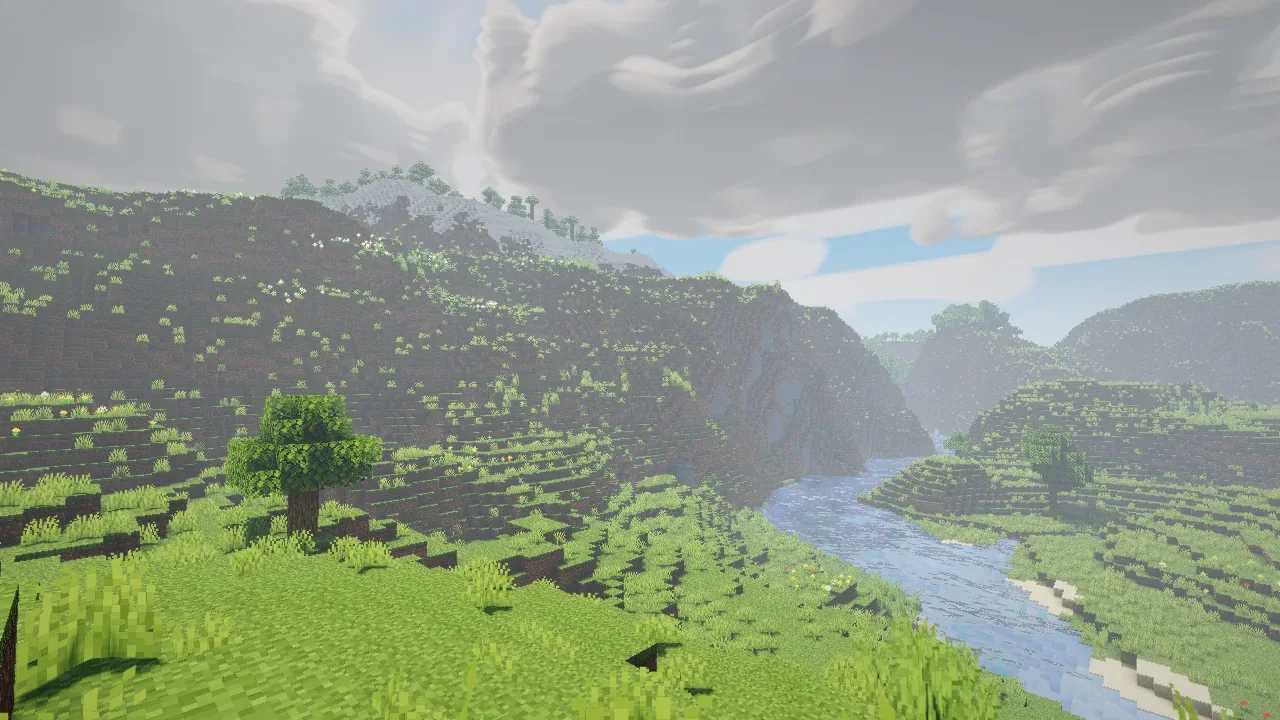
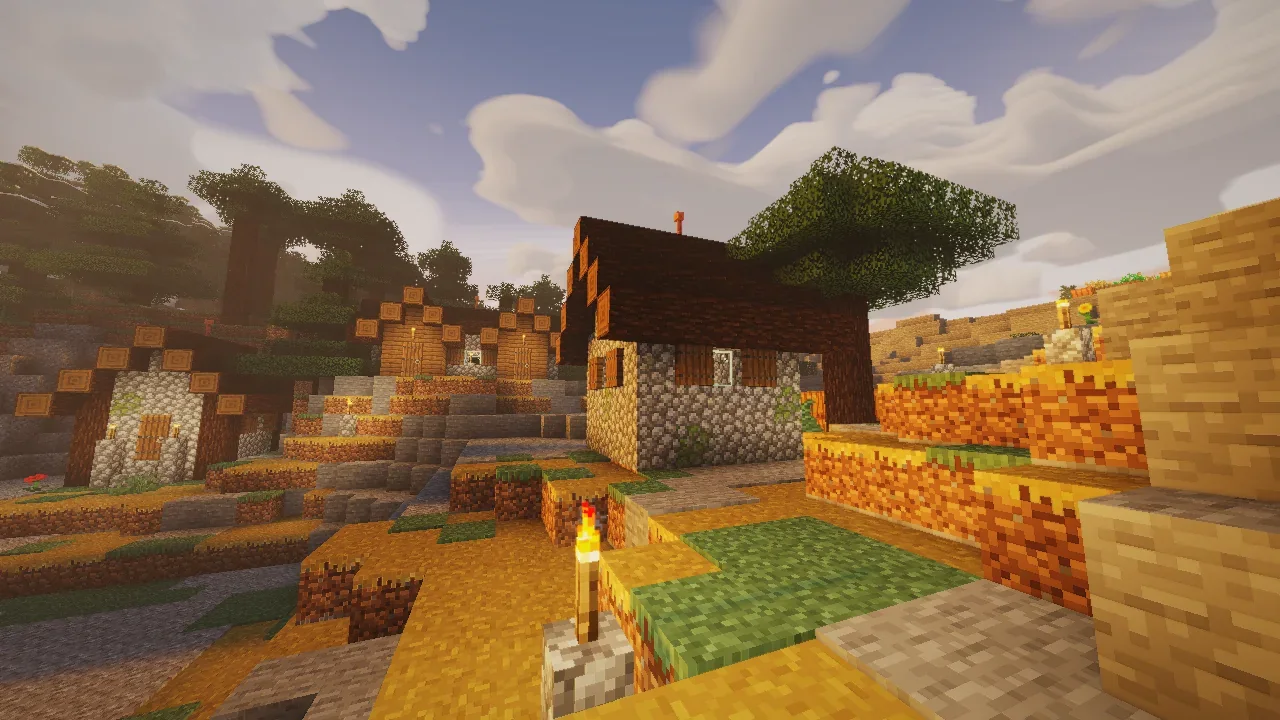
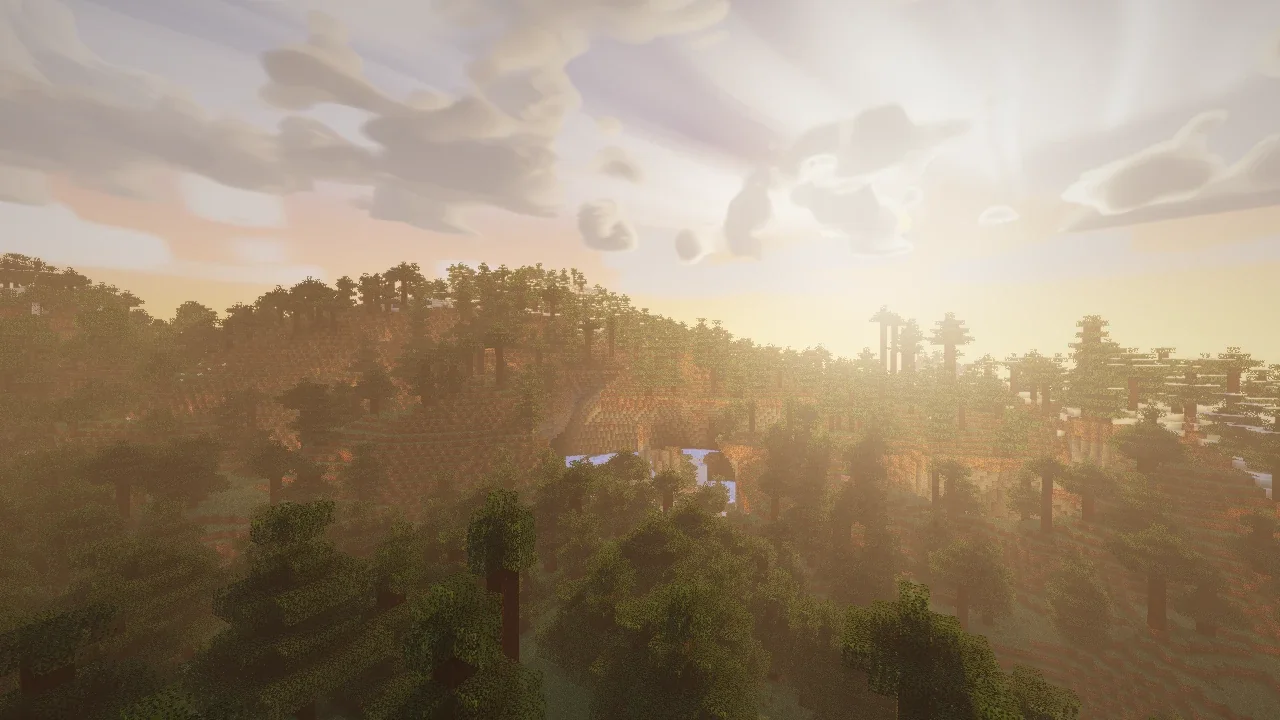
AuraLite Shaders, zrzut ekranu 1AuraLite Shaders, zrzut ekranu 2AuraLite Shaders, zrzut ekranu 3

Co robi

AuraLite Shaders to paczka shaderów, autor: AlexanderNyr. Lightweight OpenGL 4.6 shaders for Minecraft 1.16–26.3 with volumetric godrays, HDR rendering, 3D clouds, and LabPBR support.

Obsługiwane wersje: Minecraft 1.16 – 26.x. Liczba pobrań w serwisie Modrinth: 15,839. Ostatnia aktualizacja: 30.10.2026.

Obsługiwane wersje

26.x1.211.201.191.181.171.16

Historia wersji

AuraLite Shaders ma 24 wydań na Modrinth od 27.05.2026. 24 z nich wyszło w ostatnim roku. Najnowsza to 1.2.0, wydana 30.10.2026. Jest zrobiona dla Minecraft 1.16 – 26.3. Działa na Iris i Optifine. Plik ma 1.1 MB.

WersjaWydanoMinecraftTyp
1.2.030.10.20261.16 – 26.3Wydanie
1.1.421.08.20261.16 – 26.2Wydanie
1.1.307.08.20261.16.5 – 26.2Wydanie
1.1.224.07.20261.16 – 26.2Wydanie
1.1.110.07.20261.16.5 – 26.2Wydanie

Najnowsze wydanie na GitHubie

AuraLite Shaders ma otwarty kod. Najnowsze wydanie na GitHubie to AuraLite Shaders 1.2.0, opublikowane 30.10.2026.

🚀 What's New in v1.2.0 — Physical Clouds

Version 1.2.0 is the first release of the physical cloud line, and the first build since 1.1.4 that

contains no measuring equipment. The cloud deck stops being four painted sheets and becomes a medium with

a droplet spectrum; the atmosphere coefficients are re-derived from measured column depths; godrays

integrate a filtered transmittance with a fixed step count; the colour stage becomes twelve sliders; and

every debug stripe, gauge bar, class map and bypass switch from the development branch is removed.

☁️ Volumetric Cloud Engine — Microphysics, Not Constants

  • The deck is a medium. CLOUD_DENSITY selects a liquid water content (0.075 / 0.15 / 0.30 g/m³) and CLOUD_MICRO a droplet spectrum (Continental 6 µm / Typical 8 µm / Maritime 12 µm); extinction is derived from them (σ = 3·LWC·Q_ext / 4ρ·r_eff), so "dense" is a physical quantity rather than a number that was tuned by eye.

Przeczytaj wszystkie informacje o wydaniu na GitHubie

Wcześniej: AuraLite Shaders 1.1.4 (21.08.2026), AuraLite Shaders 1.1.3 (31.10.2026).

Opis autora na Modrinth

🌌 AuraLite Shaders (Minecraft 1.16 – 26.3)

⭐ 65,000+ downloads across CurseForge & Modrinth — thank you!

AuraLite is a modern, lightweight, and highly optimized shader pack built on top of the OpenGL 4.6 / GLSL 460 standard. It is specifically designed and tested for Minecraft 1.16 – 26.3 with Sodium + Iris (and compatible with OptiFine, Oculus). Since v1.2.0 the cloud deck is a physically parameterised volumetric medium rather than a stack of painted layers, and every development instrument has been removed from the shipped code.

AuraLite delivers a breathtaking, realistic visual experience without overcomplicating the screen with bloated post-processing effects (such as aggressive motion blur or heavy bloom). A lightweight HDR bloom (gaussian pyramid since v1.1.3, half-resolution and skippable since v1.1.4) softly glows emissive sources without smearing the scene. Optional FXAA/SMAA anti-aliasing, SSR, TAA, godrays, and SSAO are profile-scaled so AuraLite keeps high FPS and smooth frametimes on modern GPUs.

🧪 v1.2.0 note: The physical cloud line is now the default. Clouds are a medium with a liquid water content and a droplet spectrum, so extinction follows from the droplet radius instead of a tuned constant; CLOUD_QUALITY (raymarch steps) and CLOUD_DETAIL (shape octaves) are independent, cirrus and a mid-level deck are separate families, and the cloud shadow that gates the godrays is one column per frame, generated from composite.fsh into composite.vsh. Twilight comes from the optical path, colour control is twelve real sliders, and the diagnostic layer of the 1.1.5 branch (on-screen stripes, gauges, class maps, bypass switches) is gone. TAA is on by default in HIGH/ULTRA/EXTREME; camera jitter stays OFF. See the changelog below.

ℹ️ Historical note: older changelog sections below are preserved as original release notes.

🚀 What's New in v1.2.0 — Physical Clouds

Version 1.2.0 is the first release of the physical cloud line. The cloud deck stops being four painted sheets and becomes a medium with a droplet spectrum; the atmosphere coefficients are re-derived from measured column depths; godrays integrate a filtered transmittance with a fixed step count; the colour stage becomes twelve sliders;

☁️ Volumetric Cloud Engine — Microphysics, Not Constants

  • The deck is a medium. CLOUD_DENSITY selects a liquid water content (0.075 / 0.15 / 0.30 g/m³) and CLOUD_MICRO a droplet spectrum (Continental 6 µm / Typical 8 µm / Maritime 12 µm); extinction is derived from them (σ = 3·LWC·Q_ext / 4ρ·r_eff), so "dense" is a physical quantity rather than a number that was tuned by eye.
  • Resolution and detail are independent. CLOUD_QUALITY is the raymarch budget (Cheap 14 / Standard 24 / High 36 / Extreme 56 steps) and the new CLOUD_DETAIL is the shape field (2–5 octaves, 1080 → 135 m features). A weak GPU can keep crisp cloud tops and drop the step count instead of the shape; the two multiply, and the cost table is in the release notes.
  • Coverage is cloud fraction, not brightness. New CLOUD_COVERAGE (Clear / Scattered / Broken / Broken to overcast / Overcast) moves the threshold the shape field has to cross, and each octave preset carries a bisected offset so "Broken" covers the same ~40 % of the sky on every profile.
  • Cirrus is ice, not a small cumulus. New CLOUD_CIRRUS marches a fibrous veil at 6.5–11.2 km with its own extinction (~0.09 g/m³, 25 µm), and it dissolves into the horizon haze instead of ending on a visible edge.
  • An independent mid-level deck. New CLOUD_MID_LAYER adds a second, separate layer rather than repeating the cumulus field.
  • Real air. Altitudes in metres via CLOUD_HEIGHT (400 m / 1200 m / 2400 m / 3600 m), deck depth as a fraction of the base altitude, reach out to 32 km, wind as a velocity in m/s, per-cloud condensation level (CLOUD_BASE_VARIATION) and vertical development (CLOUD_UPDRAFT), and multiple scattering instead of a single-sample light tap.
  • CLOUD_MODE keeps the v1.1.4 layered sheets available (Layered sheets / Volumetric) for hardware that cannot afford the march.

🌤️ Godrays — Filtered, Bounded and Stable in Time

  • Shafts sample a filtered shadow term — a smoothstep band expressed in the same space as the depth compare — instead of step() on the blocker depth. Moving the camera by a fraction of a shadow texel no longer flips whole samples between lit and unlit.
  • Fixed step count. The path is bounded (40 km) and divided into a constant number of taps, so the optical depth changes continuously as the sun moves instead of jumping whenever the path crosses a multiple of the old 150 m step.
  • One cloud-shadow column per frame. The cloud transmittance that gates the shafts is screen-independent, so it is evaluated once per fullscreen-quad vertex in composite.vsh and handed over as a flat varying — 4 evaluations per frame instead of 2 million. That file is generated from composite.fsh by tools/gen_composite_vsh.py, so the duplicated field code cannot drift; CI can verify it with --check.
  • Near-horizontal light fades out towards the horizon instead of integrating an effectively infinite path through the deck, which is what made the shafts "breathe" at sunset.

🌇 Atmosphere — Coefficients From Measurements, Twilight From Optics

  • Rayleigh, aerosol scattering and absorption, and ozone as a 25 ± 15 km tent (Bruneton/Hillaire) replace the hand-tuned triplet that carried roughly 9× too much aerosol and no ozone at all.
  • Twilight is produced by the optical path: civil, nautical and astronomical phases, the Earth's shadow and the Belt of Venus, all in gbuffers_skybasic. The old global on/off ramp over the finished result is gone, so the sky no longer dies by solar −1.4°.
  • Airglow is added after the dark-adaptation gain. Multiplying it by the gain (which reaches 28 in deep twilight) used to paint the entire night sky blue at every hour.
  • The physical sky (SKY_MODE = 1) now shares its LUT-derived transmittance with the default gradient sky, so terrain fog, water reflection, clouds, godrays and the SSR sky fallback agree in both modes.

🎚️ Colour Grading — Twelve Sliders, One Tone Curve

  • The three-stop EXPOSURE / COLOR_SATURATION / CONTRAST buttons are replaced by a dedicated [Colour Grading] tab with continuous sliders: Exposure, Brightness, Contrast, Saturation, Output Gamma, Red/Green/Blue gain, Warmth, Tint, Vibrance and Vignette strength, plus a Tone Curve selector (ACES / ACES soft / ACES punchy / Photographic (AgX-like)).
  • These are declared as real Iris sliders — dragging is the point, and every value in between exists. Everything else in the pack stays an enumerated button on purpose.
  • COLOR_LUMA_PROTECT keeps average brightness fixed while the channel and warm/tint sliders move, so a white-balance experiment does not also change exposure.

💧 Water, Foliage and Stability

  • Water has an ID. minecraft:water / flowing_water map to block ID 10020, so water classification no longer guesses from colour and depth — and the whole rescue ladder that existed for that guess is now a fallback, not the primary path.
  • One wind-wave spectrum. Eight components with deep-water dispersion (ω = √(gk)) and wavelength-derived amplitude, evaluated in world space. The three longest displace the mesh (26 / 15.5 / 9.5 blocks — no aliasing on Minecraft's one-vertex-per-block grid), the rest live in the normal. The v1.1.4 surface was driven by three unrelated sine fields, one of them in view space.
  • Water no longer writes into the shadow map. A flat receiver standing in its own shadow map with centimetre waves produced self-shadow stripes whose period was constant in pixels; the vertex shader now pushes water out of the shadow pass entirely.
  • Vegetation is three classes, not one: tall plants bend from the base, short grass flutters, flower heads nod — and the wave phase is taken from world coordinates, so grass stops "speeding up" when you walk across chunk borders. Mirrored in shadow.vsh.
  • Dither is a fixed 4×4 ordered pattern, not two fract(sin(...)) hashes of gl_FragCoord: the hash was uncorrelated between pixels and unstable in float, so it read as grain over the whole frame and shimmered even when the camera was still. The cloud ray start is deterministic as well — every pixel aims at the middle of its shell, and the slicing that the jitter used to dissolve is now handled by CLOUD_QUALITY.

🎚️ Profile Rebalance (v1.2.0)

Profile · Shadows · Clouds · TAA · Bloom · Notes
VERY_LOW · ❌ 512 / 60 m · ❌ · ❌ · ❌ · Gradient sky, minimal path
LOW · ❌ 512 / 60 m · ❌ · ❌ · ❌ · Water/foliage motion, stars
MED · ✅ 1024 / 192 m · ✅ Volumetric 24 steps / 3 oct · ❌ · ✅ · The sweet spot
HIGH · ✅ 2048 / 512 m · ✅ Volumetric 36 steps / 3 oct · ✅ · ✅ · Full atmosphere + SSR
ULTRA · ✅ 4096 / 512 m Aggr · ✅ Volumetric 36 steps / 3 oct · ✅ · ✅ · Higher SSAO / SSR / aurora
EXTREME · ✅ 8192 / 768 m Aggr · ✅ Volumetric 56 steps / 4 oct · ✅ · ✅ · Cinematic

Camera jitter remains off by default in every profile.

🚀 What's New in v1.1.4 — Atmosphere LUTs, Distant Horizons Seam Fix & Half-Res Bloom

Version 1.1.4 rebuilds the experimental physical sky around shared low-frequency LUTs, replaces the hole-producing DH screen-door seam with a deterministic hand-off, and cuts post-process cost with skippable half-resolution bloom. It also finishes the TAA story for Distant Horizons (correct DH reprojection + Halton jitter on LOD geometry) and swaps glittery water fBm for a coherent Gerstner swell.

🧪 Shared Physical-Atmosphere LUTs (begin / begin1)

  • Tiny HDR LUTs, not fullscreen buffers. v1.1.3 deleted unused full-screen colortex5/colortex6 to save VRAM. v1.1.4 brings them back as 64×32 solar-transmittance (colortex5) and 32×16 multi-scatter / ground-bounce (colortex6) tables — kilobytes, not megabytes.
  • begin.fsh rebuilds direct solar transmittance every frame: sun elevation on X (−0.16…1.0, including civil twilight), camera altitude on Y (0–30 km), Kasten–Young airmass × Rayleigh + aerosol extinction, zeroed below the night hemisphere.
  • begin1.fsh layers bounded multi-scattering and biome-aware ground bounce on top of that transmittance. Noon is Rayleigh-blue; low sun is warm; swamp/snow/vegetation tints come from GROUND_BOUNCE_MODE.
  • Shared by every physical-sky consumer — gbuffers_skybasic, terrain fog, water analytic reflection, volumetric godrays, clouds and the SSR sky fallback all sample the same LUTs instead of each running a second atmosphere march.
  • When SKY_MODE=0 (every shipped profile) the LUT passes write constants and cost almost nothing. Enable Physical Sky manually in the Experimental tab.

New Experimental → Atmosphere options (off-profile defaults stay cinematic / auto):

  • ATMOSPHERE_TURBIDITY — Crisp / Balanced / Hazy aerosol load.
  • ATMOSPHERE_SCALE — Compact 25 m / Balanced 50 m / Cinematic 100 m per block (how Minecraft Y maps into atmosphere kilometres).
  • GROUND_BOUNCE_MODE — Auto (biome-aware) / Neutral Soil / Vegetation / Snow / Desert.
  • SKY_TEMPORAL — rotation-only history blend for the sky (requires TAA). Physical sky uses a higher history weight than the animated gradient sky so stars/aurora do not trail.

The swamp detector now also matches BIOME_MANGROVE_SWAMP.

🌍 Distant Horizons — Hard Seam, TAA & Iris Workaround

⚠️ AuraLite still does NOT claim full Distant Horizons compatibility. v1.1.4 is a targeted correctness pass on the v1.1.2/v1.1.3 experimental path.
  • Hard deterministic hand-off at far. The v1.1.3 16 m screen-door dither discarded random LOD fragments in the seam band; on DH 3.2 those holes showed sky/white whenever vanilla geometry did not fill the same pixe

Autor: AlexanderNyr. Z obrazkami na Modrinth.

Jak zainstalować AuraLite Shaders

  1. Zainstaluj Iris (z Sodium) albo OptiFine dla swojej wersji Minecrafta: shadery potrzebują jednego z nich.

  2. Pobierz plik .zip z Modrinth. Nie rozpakowuj go.

  3. W Minecrafcie otwórz Opcje, potem Ustawienia grafiki, potem Shadery i kliknij Otwórz folder shaderów.

  4. Wrzuć plik .zip do tego folderu, wybierz AuraLite Shaders z listy i kliknij Gotowe.

  5. Shadery mocno obciążają kartę graficzną. Jeśli gra zwalnia, wybierz niższy profil w ustawieniach shadera.

Kompatybilność

Wersje Minecraft
26.x, 1.21, 1.20, 1.19, 1.18, 1.17, 1.16
Edycja
Java
Wymaga
Niczego więcej
Licencja
CC BY
Cena
Za darmo
Utrzymanie
Aktywnie aktualizowany (11.11.2026)

AuraLite Shaders w porównaniu z podobnymi Porównaj wszystkie alternatywy

ZasóbPobraniaWersjeAktualizacjaCena
AuraLite Shadersten, który oglądałeś16K1.16 – 26.x12 d. temuZa darmo
Lumina ShaderBenjiaa197K1.8 – 26.x20 wrz 2026Za darmo
Aurelia Shadersjankrodev7,9521.21 – 26.x29 wrz 2026Za darmo
Knight ShadersGlacierDevelopment4,0291.20 – 26.x2 lip 2026Za darmo

Pytania

Czy AuraLite Shaders działa w wersji Minecrafta 26.x?

Tak. AuraLite Shaders działa w wersji Minecrafta 26.x. Wszystkie obsługiwane wersje: 26.x, 1.21, 1.20, 1.19, 1.18, 1.17, 1.16.

Czy AuraLite Shaders jest za darmo?

Tak. AuraLite Shaders można pobrać za darmo z serwisu Modrinth.

Czy AuraLite Shaders jest nadal aktualizowany?

Tak. Ostatnia aktualizacja wyszła w ciągu ostatniej doby.

Jakie są najlepsze alternatywy dla AuraLite Shaders?

Najbliższe to Lumina Shader, Aurelia Shaders i Knight Shaders. Porównaj wszystkie alternatywy

Alternatywy dla AuraLite Shaders

Lumina ShaderShadery · 1.8 – 26.x

Cinematic shaders for Minecraft Java featuring a black hole and white hole in the End, atmospheric lighting, volumetric clouds, water reflections and…

Za darmoPobrania: 197,002
Aurelia ShadersShadery · 1.21 – 26.x

Warm, cinematic golden-hour shaders — soft PCSS shadows, global illumination, volumetric clouds, glowing ores, vibrant biome atmosphere.

Za darmoPobrania: 7,952
Zenith ShadersShadery · 1.16 – 26.x

A lightweight, highly optimized shaderpack focusing on soft procedural 3D clouds, immersive underwater distortion, cozy light-source blooming, and beautifully…
Za darmoPobrania: 3,862
Medieval Realism ShadersShadery · 26.x

Grounded, period-film lighting for Minecraft 26.3: physically based sky, soft shadows, flickering firelight, morning mist, fluffy volumetric clouds, wet stone…

Za darmoPobrania: 629
Altheon ShadersShadery · 1.20 – 26.x

Realistic shaders for Iris: colored block lighting that mixes and fills caves, volumetric clouds, a physically based sky with deep sunsets, soft shadows and…

Za darmoPobrania: 24
Porównaj wszystkie alternatywy ›

Opinie

–★★★★★
Opinie: 0
50
40
30
20
10

Zaloguj się, aby wystawić opinię.